
It has been said by many in the educational community there are four C’s to 21st century learning: collaboration, communication, critical thinking and creativity. In my opinion, 21st century skills are the skills that students need to survive in a constantly changing, technologically-enhanced environment. I feel that these 4 skills haven’t changed in ideals yet, out approach and our tools have.
What is collaboration?
Dictionary.com says
* the act or process of collaborating
* product resulting from collaboration:
(Thank you, Captain Obvious)… so,… then, I looked up collaborate
collaborate
* to work, one with another; cooperate, as on a literary work:
* to cooperate, usually willingly, with an enemy nation, especially with an enemy occupying one’s country
But the entire time I’m reading this definition, I’m thinking, “Stop, collaborate, and listen.” (Thanks Vanilla Ice!)
So my definition of collaboration: To pause on individual ideas, gather thoughts from both sides, discuss ideas from both sides and then to create the best plan using thoughts and ideas from all parties. In short, collaboration is joint effort.
So how do we teach this?
Group work? PBL?
I think that we teach collaboration by looking at what our end goal is. What is our ideal outcome? To borrow Vanilla Ice’s words, we will “Stop, collaborate and listen.” Collaboration allows for multiple people to NOT agree BUT come to a WORKABLE solution. I think this skill has been lost in our world of instant gratification. Teaching math has given me the understanding that problems can be solved in multiple ways. We can get the same solution even though our plan and steps vary. In a world of social media and google, I think w have forgotten this.
* Team Building Activities — I think about the scene in Apollo 13, when they dump the random box of stuff on the table and tell them, “we gotta make this (square) fit in this (round) using only this” (Here’s the YouTube link https://www.youtube.com/watch?v=1cYzkyXp0jg)
* Give your students challenges – this can fit in any subject with any level of technology
* Verizon Innovative Learning – I had a group of students participate in the grant contest. They had to come up with a new, unique and useful app. They had to figure out the way it should look, what was the purpose, how would it work. This gave tons of great opportunities for discussion of what is considered important and useful. They did not always agree, BUT when the discussion was brought back around to the goal, they were able to work together.
* Science – (We live in a hurricane zone) – Using only household items, what could you use during a hurricane? What is useful? What is useless? What is it’s purpose? (My kids have lived through 2 hurricanes that included heavy flooding in the last 2 years– this is real to them)
* Household items to make masks?
* Create a solution to their own Apollo 13 type problem
* Math – Build a bridge using toothpicks and glue. Test them out, which hold more weight? Will the bridge at differently if you use plate weights vs. small weights (smaller surface area)? How did design effect the results?
* Using only marshmallows and toothpicks build a structure. 10 minutes in teams rotate structures. 10 minutes later rotate again. (This is ideal for 3 groups of 5 or less). At the end discuss structure strength. This can be modified that groups only work on 1 structure the entire time also.
* Budgets – This can be used so many different ways with so many real-life problems! Add tax or discounts, throw it all in on an Excel spreadsheet and you’ve created other lessons as well. Also, many of these start off as individual assignments but the conversations they have as they are working are great!
* Plan a party with a certain budget for a certain number of people.
* Go “shopping” for another student without buying gift cards
* Using the median salary from bls.gov/ooh or sciencebuddies.org create monthly budget for your future career. Decide if you need a roommate, how much will your entertainment budgets be.
* ELA – Writing parodies. Your student could be the next Weird Al or Michael Scott?!
* I love stories like The Big Bad Wolf – My Side of the Story by Kate Clary. Have your students write their own version of a story, from the antagonist’s side. Students can learn empathy — and also the importance of hearing both sides before drawing conclusions.
* Social Studies – Writing about historical events by creating raps, songs, plays, poems, videos, movie trailers…
A few things that I have learned about successful collaborations:
1. come from an understanding that the end result is more important than my original idea
2. do not look the same
3. INVOLVE MISTAKES and FAILURES
I think we have forgotten that a goal is the end result. There can be problems and detours along the way, those can strengthen our solutions, or they can break what we have accomplished so far.
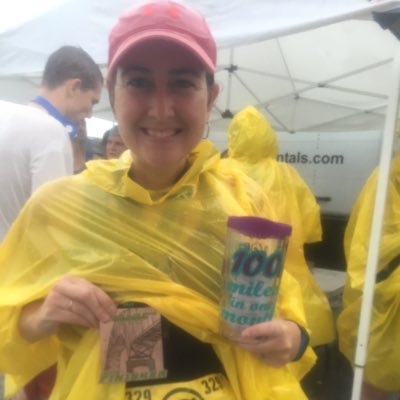
I like to think of it this way— I trained for a half-marathon. My goal was to complete 13.1 miles. There were people who ate different than me, trained different than me, had different injuries and set backs than me, wore different shoes and clothes than me, but we both crossed the finish line (them – probably a lot faster than me!)

 Teaching Re-Imagined